
Perspectives on the spectrum
Autism at Northview High School and in Society
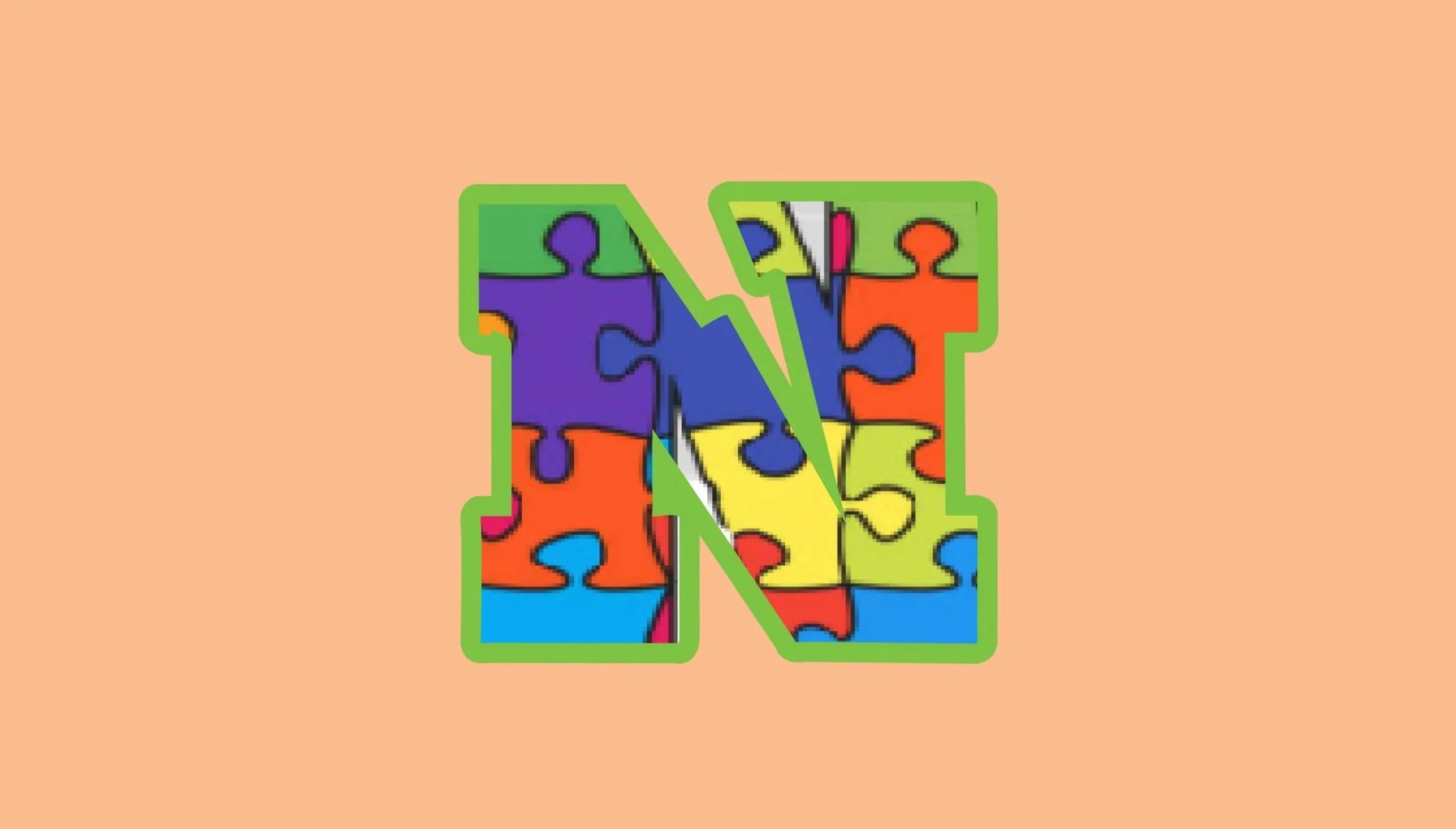
Design by Allen Liu
Allen Liu, Copy Editor & Sheehan Banka, Staff Writer
Have you ever found yourself keeping your hands perfectly still to deal with an uncomfortable situation? Or expecting others to guess your train of thought based on intentionally hidden context clues? Maybe you stared into someone's pupils once, unbothered by an inexplicable need for eye contact. Can you imagine pretending nothing is wrong in a situation where your entire plan has been thrown off track?
Sounds overwhelming, right?
Did any of the conditions listed above feel personally accurate to you? If so, you may have allism, a condition that applies to all individuals who do not display any signs of autism.
If that description felt unnecessarily blunt or even a little condescending, don't worry: You're not alone. Millions of autistic people worldwide live through similar descriptions of their symptoms every day. These conditions are largely out of their control; however, individuals with autism are easily perceived as inferior to the allistic community. Hasty generalizations and an overall misunderstanding of autism are key factors in this marginalization. Luckily, communities within Northview High School and around the world are working to erode the societal stigmas around autism, developing a healthier environment for allistic and autistic communities alike.
What Is Autism?
Autistic Spectrum Disorder (ASD) is a neurodevelopmental disability frequently characterized by behavioral issues, challenges with social interaction, and an irregular attention span. Department of Neurology expert at McGill University, Dr. Mayada Elsabbagh, and ASD professor Dr. Catherine Lord describe autism as a "constellation of early-appearing social communication deficits and repetitive sensory-motor behaviours associated with a strong genetic component." This means autism is not a condition determined or affected by one's lifestyle. As the name implies, ASD is a spectrum; not everyone displays the same symptoms, and no symptom affects everyone equally.
Let's repeat that: Autism does not affect everyone equally.
Today, the distinction between "high-functioning" and "low-functioning" autism, once considered vital for isolating autistic individuals with stronger symptoms, is widely criticized because of its potential to categorize certain individuals in a derogatory manner. The usage of "autistic" or affiliated words like "special" and "slow" as an insult is also commonplace among students and even some adults, often due to misinformation on the topic. Such jargon fuels societal stigmas against the neurodivergent community and leads to marginalizations that only worsen public perception of autism.
Autism at Northview
At Northview, student volunteers assist paraprofessionals in creating hospitable learning environment for students with ASD. One such volunteer, junior Cecelia Hormel, shares her personal joys from working with students with special needs.
"Working with the kids and just being a part of their lives is such a special thing, not only for them, but for you. It feels so rewarding to be able to do what I do," said Hormel, who has been helping students with special needs since she was a freshman.
"For example, in the morning, sometimes when I'm having a really hard day, I'll go into the four hundred hallway and I have these three kids...they all come up to you and give you hugs, and it really makes your day. And [I'm] so privileged to be able to work with them and be their friends."
During advisement, Hormel visits classrooms designed for individuals with special needs, where students with ASD (among other developmental disabilities) participate in a medley of activities. Together, they learn life skills such as cooking and baking, improve their communication through virtual games, and even throw parties. Each student has an Individualized Education Plan (IEP): a schedule unique to their needs, due to the inequable nature of autism. Hormel has forged many strong relationships through the mentorship program and believes close interactions with neurodivergent individuals can significantly alter one's perspective on the spectrum.
"Thankfully, we have a lot of really kind people at our school who are willing to help out with the kids," said Hormel. "But unfortunately, at past schools—and really, everywhere—people tend to make fun of special needs students, and it...breaks my heart for them. Once [you get] to help them out in the classroom, you understand they're not annoying. They're not any less than we are just because they have special needs."
To encourage the representation of neurodivergent students as an equally important part of the Northview community, Hormel proposed including a page or two in the yearbook dedicated to students with special needs and some of their events. Throughout the year, these students attend field trips under a program of Community-Based Instruction (CBI). One CBI involves the students learning to make a special type of slime that can dampen sensory issues and provide a calming distraction in overwhelming environments. Some students also participate in the annual Special Olympics; Hormel's idea would allow the yearbook's representation to encompass both physical and mental disabilities.
"A good kind of student organization [at] Northview could help out special needs kids [and create] so much awareness around it," said Hormel.
Crystal Kehres, a teacher for students with special needs at Northview with nearly a decade of experience as a paraprofessional, explains more about the school's mentorship program for interested students.
"It's an elective that students can take here," said Kehres. "Mentors learn about various disabilities and...how to support [students with special needs] to communicate. That helps expand knowledge by having general [education] students in my classroom as well. It's an elective class for any grade...we always need more students to take mentorship."
Along with class-based assistance, Northview also offers support systems through organizations that uplift and expand access for students with ASD. One such club, Care for Hope, provides a range of activities to help students with neurodevelopmental disabilities sharpen their social and emotional skills. Care for Hope members work at inclusionary events (such as the Special Olympics) to create opportunities for students who are often barred from participating in schoolwide activities.
The need for organizations like Care for Hope, however, stems from the social ostracism of individuals with autism. An ideal society inherently treats all of its members with the same inclusivity and respect, and does not separate the autistic community from the allistic community, even as the latter comprises a majority of the populace.
The Social Predicament
The 21st century has seen a drastic rise in the common misconception of an "autism epidemic," medically debunked yet publicly feared. According to the Johns Hopkins Bloomberg School of Public Health, diagnoses of ASD have increased by nearly 300% over the last two decades. A proportion of the general public has indignantly met this "worrisome" statistic with outrage and hatred targeted toward the autistic community. In light of these reactions, government health officials have been scrambling to find potential causes and explanations for the rising rates of autism diagnoses, namely, by investigating vaccines, medicines, and environmental toxins. Sometimes, this haste to obtain answers for the public leads to faulty reasoning and the unintentional spread of misinformation. The implications of such haste can quickly manifest as a wide audience viewing a medical condition through a one-dimensional lens.
In reality, the driving factor behind the increasing diagnoses of ASD is not a rise in individuals with the condition, but rather an improvement in the diagnostics and technology that help identify autism in individuals. Society has unknowingly documented undiagnosed neurodevelopmental disorders for decades prior to this rise; look at Lennie Small from John Steinbeck's "Of Mice and Men." His mannerisms and behavior exemplify common manifestations of ASD, but are neither addressed outright nor accommodated for.
The criteria that medical analysts look for to diagnose autism have also changed over time, expanding to include a broader range of the neurodivergent spectrum. A 2015 study conducted in Denmark by Dr. Diana Schendel, a professor at the A.J. Drexel Autism Institute, estimated that a third of youth autism diagnoses between 1980 and 2011 were a direct result of changes in diagnostic criteria. Another factor contributing to the rise in ASD diagnoses is the increase in public accessibility to medical practitioners. In Schendel's study, physicians' increased ability to test for a certain condition at the patient's home rather than at a hospital (known as outpatient contacts) accounted for another 27% of diagnoses.
Perhaps the greatest social issues autistic individuals face today are the increasing stigmas surrounding ASD. Autism diagnoses do not determine a person's moral values; nonetheless, persecution persists as swaths of society misinterpret medical statistics to vilify the condition with slurs and derogatory remarks. According to the National Center for Education Statistics, less than 20% of all students in the U.S. experience bullying in their school environment. However, over 60% of autistic children experience bullying in school, often to the point of habitualization. Many of these individuals are unable to properly report their experiences or seek assistance. Outside the United States, many families view autism as a flaw, an inauspicious birthmark tainting their bloodline. For example, some parents in South Korea prevent their neurodivergent children from seeking a diagnosis or support system to avoid further insight into such a "taboo" subject.
However, positive forces are also taking action for the autistic community. A 2021 study from the University of Bucharest, Romania, found an 80% decrease in discrimination against ASD by fellow students when schools implemented contact-based education (CBE). The sociologists involved in the study encouraged allistic students to work with their autistic peers by placing them in the same groups for class projects. In this manner, CBE reduces social stigmatization by humanizing the stigmatized group (in this case, autistic students) and demonstrating the inaccuracies portrayed by societal misconceptions.
Discrimination against autism is also inherently disincentivized in schools, including Northview. Neuroableism—bullying or discrimination on the basis of neurodivergence—is, by definition, a Tier IV offense under the Fulton County Schools' Student Code of Conduct. Additionally, many neurodivergent content creators are using their social media influence to denounce posts and videos stigmatizing autism or incorrectly associating it with societally "unacceptable" characteristics.
Ultimately, misconceptions about autism are not endemic to Northview. In fact, stigmas are often heightened in schools and institutions across the United States and around the world. Though there are a multitude of factors that determine the impact of these misconceptions, misleading facts and yellow journalism are consistently the driving forces. That's why approaching this subject matter with an objective and inquisitive lens is so vital to maintaining inclusion and equity. With bias present, an uninformed perspective allows prejudice to run free.
Xingzhu Li, a special needs teacher at Northview who has been uplifting students with ASD since 2006, speaks to what perspective we should adopt instead.
"Some [students with special needs], even though they have so many physical limitations and challenges, still strive and are so eager to learn. That's really admirable," said Li. "If we could just step outside of the box, it's possible to recognize their strengths."