

Fulton County's revised device policy
Fulton County's new device policy, and how teachers and students are adjusting to its implications.
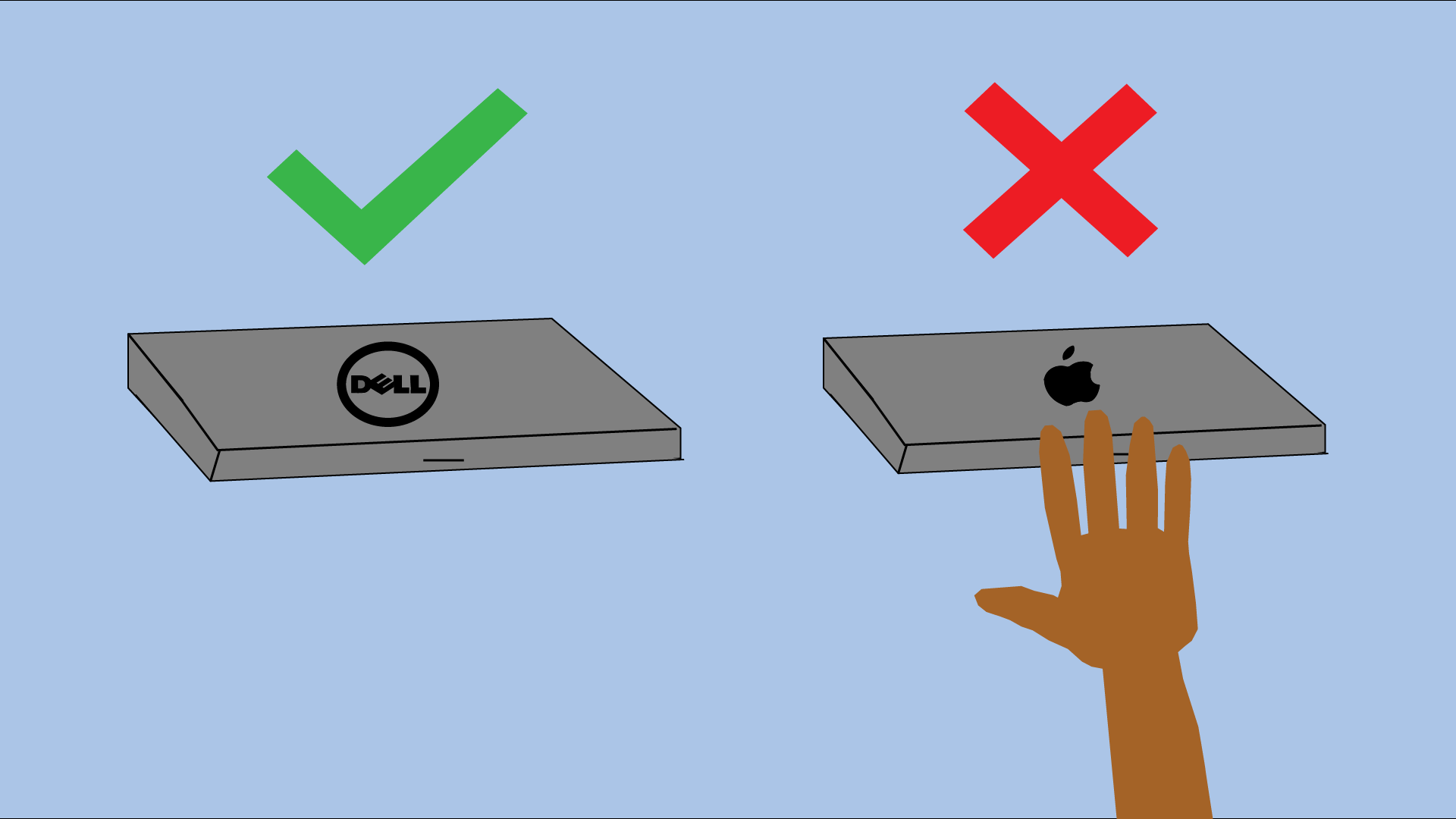
Design by Manha Survery, Scarlet Baumann, & Tanya Shiram
Manha Survery, Editor-in-Chief, & Scarlet Baumann, Staff Writer & Tanya Shriram, Staff Writer
The state of Georgia has passed a new law for the use of personal devices in school. The Distraction Free Education Act, signed on July 1, 2025, forbids the use of personal devices during school hours. Students are restricted from using personal phones, laptops, smartwatches, headphones, etc. This is meant to reduce distractions, create a more focused learning environment for students, and ensure that all students have reliable learning tools provided by the district. Many teachers are looking forward to the positive impacts that could come from not having personal devices, and mainly personal computers in school.
"My hope is that it will be a positive impact on students being engaged and actively involved in the work of the classroom, and with less things that make that distracting or difficult to do," Language Arts teacher Dr. Ashley Ulrich said.
Furthermore, grades K-8 are fully prohibited from using personal devices throughout the whole school day, which includes lunch and assemblies. Grades 9-12 can carry personal devices, but cannot use them while class is in session. Thus, school at the high-school level receives more room when it comes to the mandates.
While some counties chose to implement the law right away, other counties are delaying the enforcement of these new guidelines. Gwinnett County Schools decided to implement the new law starting in the 2026-2027 school year, while Fulton County Schools started the law on the first day of the 2025-2026 school year.
"I believe the goal has been achieved [for grades] nine through 12, and that being able to give teachers leeway in the high school is very important. Because in elementary and middle it's a legal infraction to have students with devices at school." Librarian Darryl Paul said.
The Messenger conducted a poll asking how difficult it has been to adjust to the advanced policy. Interestingly, of 576 students, 68% of students said difficult, 20% said moderately difficult, 8% said a little difficult, and the rest said not difficult. Students are accustomed to using their personal computers during school, and so the affect of the obstacles they are facing was found with the poll. Principal Martin Neuhaus also had some advice about the policy when asked about how he felt about it.
"In my mind, it's a little bit like, you know, the traffic lights, we all want the light to be green, like we all want to go, but when it's red, we're supposed to stop because now it's someone else's turn. Can you get away with running a red light? Of course you can. But eventually you're going to either hurt somebody or you're going to get caught, and you're going to get in trouble. So the rules are there to kind of make society work," Neuhaus said.
Students have expressed their challenges with the new guideline and are facing many bumps in the road as they adjust. The Messenger conducted a poll asking students if computer issues make it harder to work on the school device, and of 592 students, 99% responded with yes. The Messenger also conducted a poll asking if blocked websites impact students' productivity in school. Of 578 students, 93% responded yes as well.
Thus, many students mention how they do not even bring their school laptop to school, or do not use their school laptop throughout the day at all. Instead, they just plan to use their personal device to do their work once they get home.
"Honestly, I kind of just avoid using my laptop until I get home. If I have homework on my school computer, I just wait till I get home because the laptop is so slow, it doesn't do anything for me. It's deleted my work multiple times, so I prefer to just have everything at home," Sophomore Megan Johnson said.
Many students also question if the new devices policy was implemented in relation to students' increased use of Artificial Intelligence in school.
"I think AI is is tied in a little bit, but not necessarily. [You know], this is not because of it. I think this is mainly because the phones are a distraction to learning, um, and [takes the] focus of what's happening in the classroom away, whether that's intentional or not." Neuhaus said.
It is not confirmed if the use of Artificial Intelligence contributed to the revised policy. However, the new device policy will decrease the use of artificial intelligence, which should help with the cheating that goes on in schools with the use of websites such as ChatGPT or Gemini.
Regardless of varying opinions, teachers are enforcing the rule of no personal devices with students to help improve their grades, keep them focused, and prevent them from using technology when prohibited. Overall, the new law that the county has implemented has brought out various reactions as teachers, administrators, and students adjust simultaneously. Like every law, new developments could come up, and until then, Northview is striving for compliance.