

First taste of Formula 1
A guide and review to watching F1
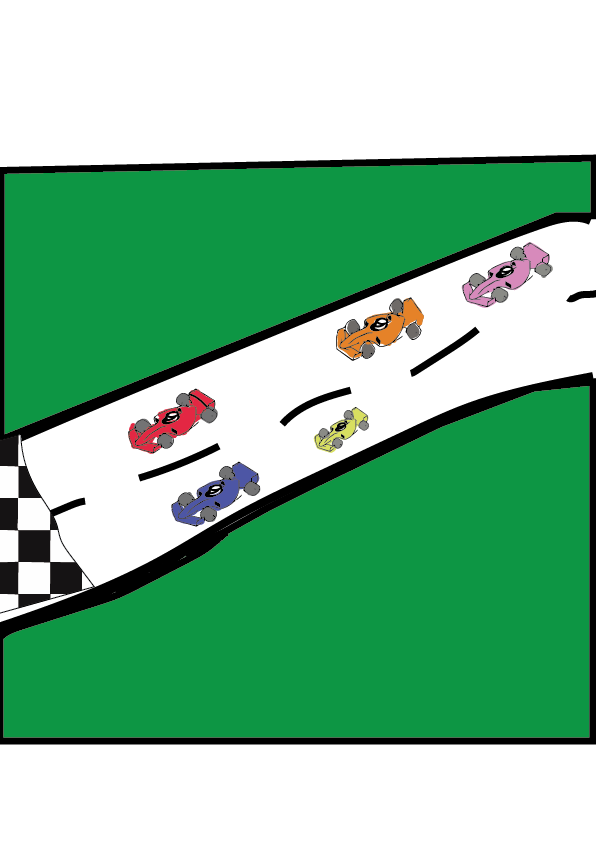
Design by Ansh Vigh & Scarlet Baumann
Ansh Vigh, Sports Editor & Scarlet Baumann, Staff Writer
The lights go out, and the roar of 20 engines drowns out the crowd. The smell of fuel lingers in the air while fans cheer, wave flags, and hold their breath through the first turn. Watching Formula 1 in person is unforgettable, but even on a TV screen, you can feel the excitement bleeding through. Being at a race might not be for everyone, but watching it sure is. If you caught the new Formula 1 movie this year, you probably got a taste of the drama, but the actual race weekends are packed with even more strategy and tension that make it worth tuning in.
A Formula 1 weekend stretches over three days, and each day has its own role. Fridays are usually dedicated to practice sessions, where teams test different setups and strategies. These hours on the track may not carry the same level of excitement as the race itself, but they allow drivers to learn the circuit and engineers to gather crucial data. This is a perfect day to watch if you’re just getting into the sport and want to learn more about the basics.
Saturday raises the stakes with qualifying. This is split into three rounds: Q1, Q2, and Q3. Drivers get eliminated at each stage until the final 10 battle for pole position. It might sound simple, but watching a driver push their car to the absolute limit for a single lap can be some of the most thrilling action of the weekend. The fastest earns the right to start in first place on Sunday, which often is the difference between victory and playing catch-up.
Sunday, the main event happens: the Grand Prix. Races usually last around two hours, covering more than 300 kilometers, which can be dozens of laps depending on the track. It’s not just about speed; strategy can make or break a race. Teams have to decide when to pit, a break where they check the condition of the car, which tires to use, and how to react to sudden changes like weather or crashes. A late rain shower or a well-timed safety car can turn the entire order upside down. This balance of planning and chaos is what keeps fans hooked.
Some weekends throw in an extra twist with the sprint format. Instead of a quiet buildup, Fridays feature qualifying rounds, where racers compete for the first spot on Saturday. Saturdays hold a shorter sprint race of about 100 kilometers, and Sundays still finish with the Grand Prix. It is a newer addition, but it gives fans another chance to see wheel-to-wheel action and for drivers to score extra points.
The scoring system itself is straightforward: the winner of a Grand Prix earns 25 points, second place gets 18, and the points continue down to 10th place, which earns a single point. These add up over the season for both the Drivers Championship, which crowns the best driver, and the Constructors Championship, which rewards the team that performs best overall. Every position matters, so you will often see fierce battles in the midfield, even if the winner seems out of reach.
Of course, to follow all of this, you need to know where to watch. In the United States, races air on ESPN, ESPN2, and occasionally ABC. F1 TV Pro offers live streaming, multiple camera angles, and replays for die-hard fans who want to catch every session. Other streaming services like YouTube TV, Hulu + Live TV, and Fubo carry the channels that show Formula 1. Coverage varies by country, so it is worth checking local listings.
The sport is watched all around the world, with the races occurring in multiple countries, such as Saudi Arabia, Bahrain, and Azerbaijan. It gives the opportunity for millions around the world to become more familiar with F1. Growing fans have gotten to attend races with family and friends and have an experience that they will never forget.
"It's not just about fast cars, it's also about the innovation and strategy behind the scenes, which is what really keeps me hooked," Azfar Momin, an F1 fan, said.
With 10 Formula 1 teams going into the 2025 season with more than two cars racing, there is a new addition to the sport. Cadillac has joined Formula 1 for the 2026 season and will now be racing. Sergio Pérez and Valtteri Bottas, the two newly signed drivers for Cadillac, are both Grand Prix winners and have 16 wins and 106 podium standings between the two of them.
"As we said in November, the commitment by General Motors to bring a Cadillac team to Formula 1 was an important and positive demonstration of the evolution of our sport. I want to thank GM and TWG Motorsports for their constructive engagement over many months and look forward to welcoming the team of the grid from 2026 for what will be another exciting year for Formula 1," Stefano Domenicali, President and CEO of F1, said.
With F1 being so famous, many teenagers are also hoping to become F1 drivers when they grow up, or even work behind the scenes. Many students in Johns Creek have taken an interest in engineering, management, and more.
"I want to be an engineer who builds the cars because I love the sport and cars in general and want to be able to build my own one day," Lambert High School senior Reece Hahn said.
F1 is more than just a race now; it's a lifestyle, a basis of friendship, and a community for all to join. Whether you're in your living room or watching from the stands of an actual race, it's an eye-opening and memorable experience for all. So whether you're a long-time fan or just starting out, now is the perfect time to watch F1 again and experience what makes F1 so unforgettable.