
The CDC and its health legacy
The pivotal events and controversies within the CDC and how it relates to the American people
Design by Allen Liu & Prisha Jain
Allen Liu, Copy Editor & Prisha Jain, Staff Writer
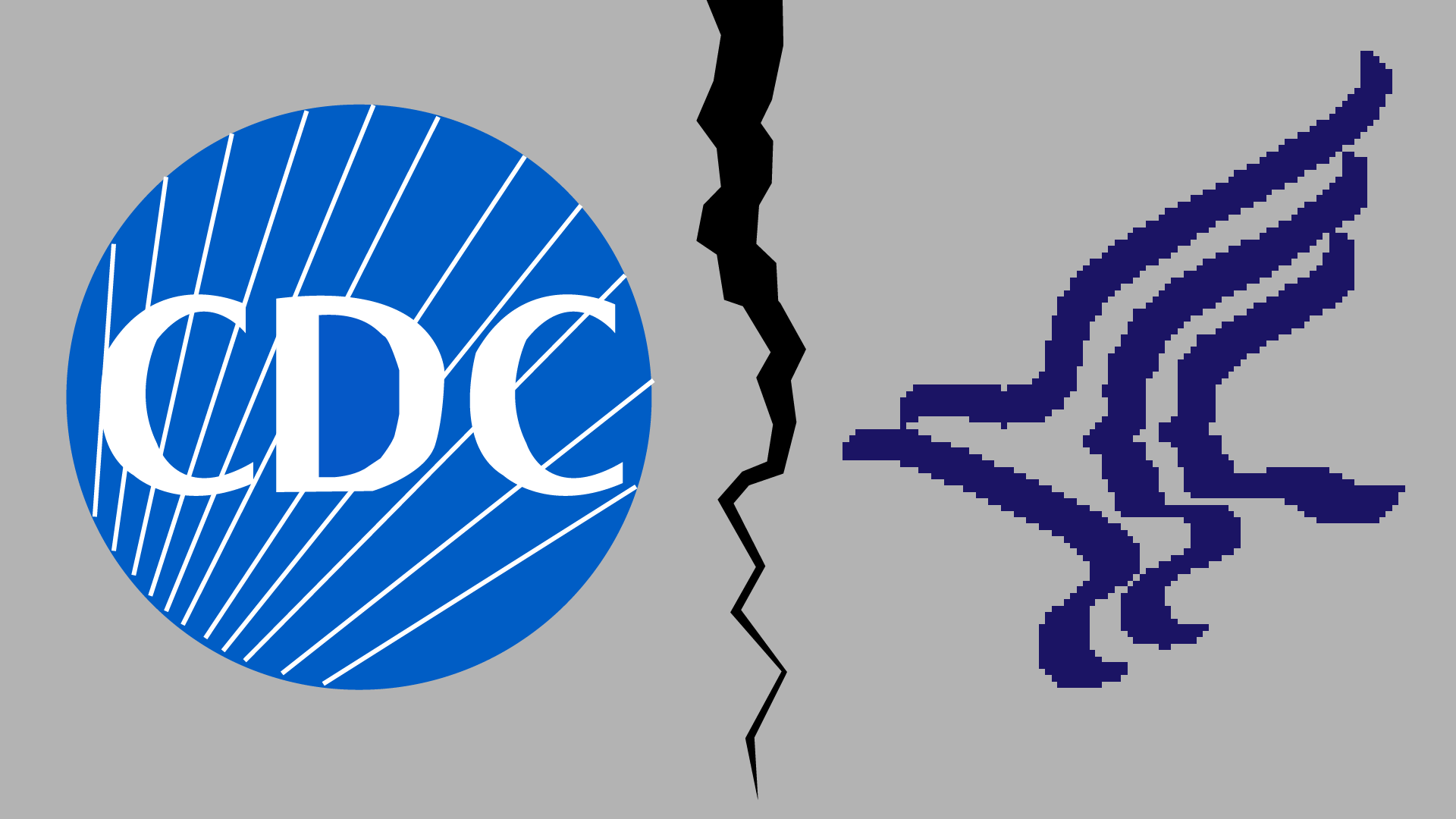
For nearly a century, the Centers for Disease Control and Prevention (CDC) has acted as the sword and shield of American public health, issuing federal guidelines and regulations on topics ranging from healthy handwashing habits to nationwide vaccine mandates. Recently, however, the credibility of the CDC and its ability to stay impartial amidst political turmoil have been called into question.
Founded on July 1, 1946, in Atlanta, Ga., the CDC is the United States’ premier public health governmental agency, meaning it is federally funded and directly oversees disease prevention and health protection. Historically, the CDC is credited with feats such as eradicating smallpox, disseminating the polio vaccine worldwide, and playing a central role in containing various other infectious diseases such as Ebola, Zika virus, and H1N1 influenza.
This trend of biotechnological innovation and scientific advancement was once thought to be unstoppable. However, the arrival of COVID-19 quickly revealed the shortcomings of the agency and its unpreparedness for a novel pandemic. The American public expected quick, accurate, and well-informed guidance on proper procedures for COVID-19 and were instead met with testing kit complications, mixed messaging, and mass shortages of livesaving personal protective equipment (PPE). These missteps have since fueled a general sentiment of distrust and skepticism over the once esteemed CDC.
Adding to this strain are the recent budget cuts imposed by the Trump administration. Proposed cuts would slash funding by 53%, eliminate 61 programs, and lay off another 16% of health agency staff. Proponents argue that these cuts will streamline bureaucratic operations and save previous taxpayer dollars, but critics warn that the reductions make America vulnerable to constantly emerging health threats.
In an effort to reverse the status quo, the United States’ Secretary of Health and Human Services, Robert F. Kennedy, Jr., has implemented sweeping changes to both ideology and policy within the CDC. In particular, he aims to flip American nutrition on its head to crack down on ultraprocessed foods, additives, chemicals, and seed oils: factors he views as the root of the nation’s health crisis. Simultaneously, Kennedy has waged war against vaccine science, publicly attributing the recent rise in autism diagnoses to the increase in vaccine administration.
Consequently, the CDC’s Advisory Committee on Immunization Practices voted to shift from a universal recommendation for COVID-19 vaccines to one based on individual choice. At the same time, the nation faces one of the deadliest flu seasons in recent history, with the highest rate of child deaths recorded in over a decade, raising more concerns about the CDC’s tumultuous recommendations.
Leadership upheaval has gone even further to deepen instability within the agency. Susan Monarez, newly elected director for the CDC, was abruptly fired by the Department of Health and Human Services (HHS) on Wednesday, Aug. 27, less than a month after being given the position. The announcement made by the HHS left many stunned, raising doubts about the reliability of the leading health organization of the country.
According to Monarez, her firing was a result of her refusal to authorize a vaccine that she felt had lacked information and peer-reviewed research behind it. The HHS, on the other hand, has not publicly confirmed anything. The disagreement led many to wonder if the issue is about politics or concerts about her work.
“Even under pressure, I could not replace evidence with ideology or compromise my integrity,” Monarez said in her opening testimony to senators. “Vaccine policy must be guided by credible data, not predetermined outcomes.”
Monarez is set to testify before Congress, while her incoming replacement, Jim O'Neill, has sparked his own fair share of debate due to concern with his close political ties and minimal background in science or medicine.
Fiona Havers has provided more details on the issue. Havers was a former employee at the CDC, but she quit her job as an infectious disease doctor this year in June to protest what was happening at the CDC. To explain in detail, she felt that political influence was undermining proper science and that professional data was not being taken into account. While at the CDC, she ran a hospitalization tracking system that monitored COVID-19. Havers believes that the issues could lead to devastating outcomes.
"I think the problem with what's happening now is that people are trying to take away access to vaccines because they falsely believe that the vaccines are harmful, and I think that that can have very damaging consequences," Havers said.
Havers mentions a lot of things that she is worried about, one in particular is seeing people die from diseases that have a cure somewhere in the world.
"I'm honestly really worried that we're going to see a lot more Americans, like older adults and children and other people, die of potentially preventable diseases if vaccination rates drop," Havers said.
To add, Juliete Francisco da Silva, a scientist and immunologist at Emory University, shared her views on this issue. She firmly believes in the importance of science and that without it, the world as we know it would not exist.
"If we don't believe in science, we will retrocede. In four years, we will retrocede more than a hundred years in development. I think we need to be very careful what we fight for,” Silva said.
These events have not only left a toll on parents, but Northview High School students as well. Emory University was founded in 1836 in Newton County, Ga. It has since become a widely-renowned “New Ivy League” university with prestige in its robust nursing and medicine programs. Emory is also home to dozens of Northview alumni who aim to pursue a career in STEM. The latest developments in science and rhetoric have sparked concern among students who believe their future is implicated in the fight against science.
Freshman at Emory University and Northview alumnus, Kento Taylor, expresses his uneasiness regarding the state of current affairs.
“When public trust in science is compromised, it affects everything we do from research grants to the way we’re taught,” Taylor said. “It’s frustrating to see science politicized when so many of us dedicate our lives to it.”