

Forgotten Government
Why don't people care about local government?
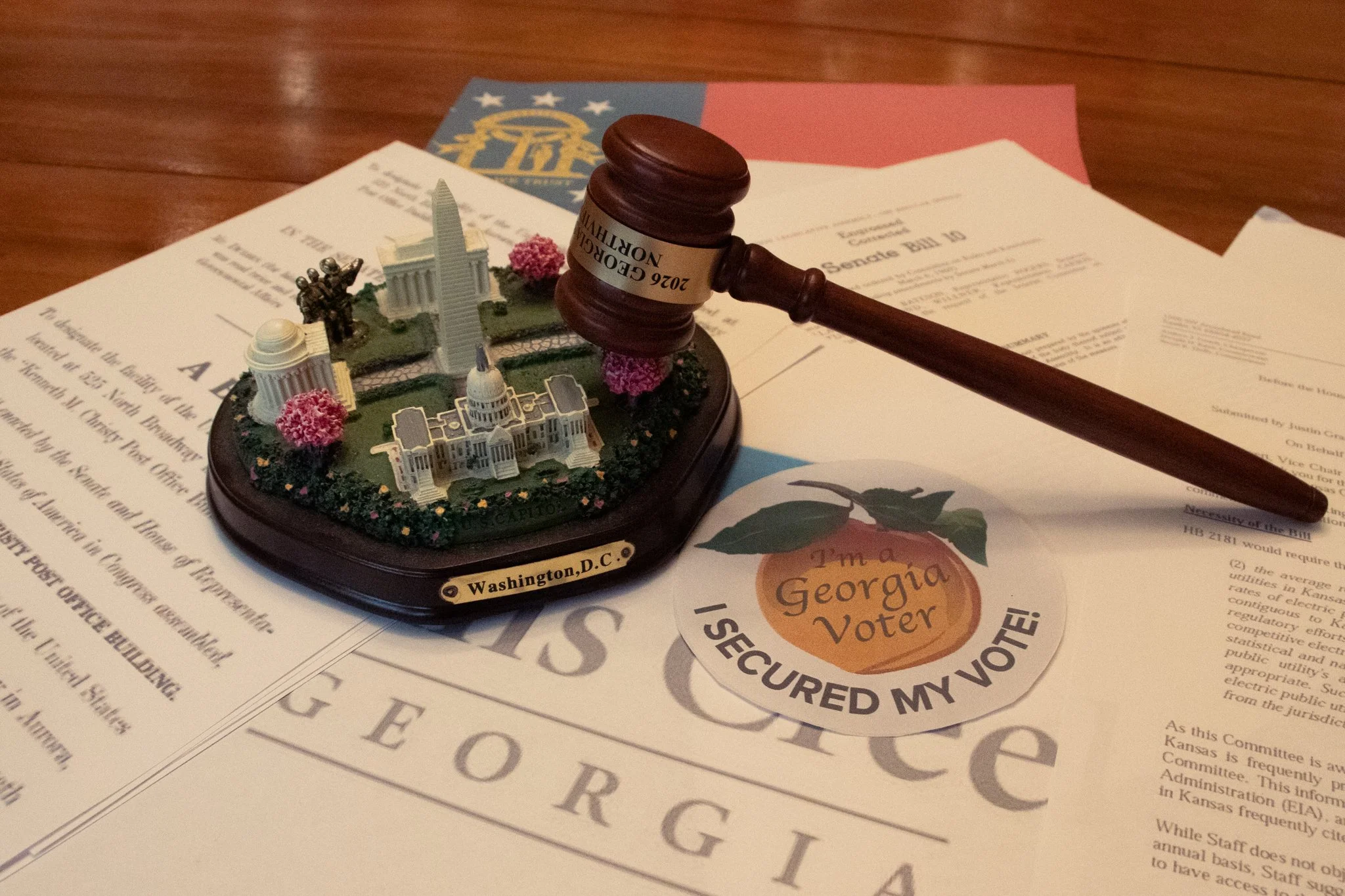
Photo by Ian Sands.
Ian Sands, Editor-in-Chief, & Nikki Yagnavajala, Staff Writer
Politics is one of the most important and divisive topics that affect us all universally. You can't turn on the TV without seeing news about congressional bills or presidential decisions. These networks broadcast political news to the masses, and because they are so widespread, they focus on the broadest possible level of government: the national government. What they leave out is arguably the most important form of government: the local level.
Many factors contribute to the notion that the federal government is the most powerful level of government. Many voters see the national government make broad decisions and assume they have the largest impact on their lives. However, they often fail to notice how local government decisions impact them in their day-to-day lives. In 2025, only 21% of Americans said they closely follow local news. Limited local media coverage amplifies this problem, as most people watch national news and tend to ignore local sources. AP U.S.Government and Politics teacher Stephanie Roche agrees that viewers often skip over local coverage.
"It's easy to put that spotlight on the national government," Roche said. "A lot of the local ones kind of get to the wayside, or you don't get the media coverage of it."
This is especially prevalent in younger voters, as social media has become their biggest news source. In fact, younger adults today are much less likely than other age groups to trust or follow local news at all. Creators on social media often curate content to reach a wide audience, leading viewers to focus on national controversies rather than the decisions affecting their own neighborhood. Because of their lack of local awareness, young voters, who already have a low turnout, are even less likely to participate in local elections. As a result, lawmakers have no information from young adults when making important decisions that impact their lives. Students who are active with local government corroborate this. For example, Pavani Pai, a 10th-grade student in the Georgia Youth Justice Coalition and debate, believes that her peers are not involved enough with the local government.
"I definitely don't think [people care enough about the local government], since the local elections have the lowest voter turnout, even though it matters," Pai said.
While national-level decisions are undeniably important, more often than not, they deal with issues with a broad range, which many people will never experience. Local issues, on the other hand, are much more prevalent for the masses. Local municipalities control a sizable portion of the services you use every day, whether it be the roads you drive on, the restaurants you dine in, or even the water you wash your hands with. Dilip Tunki, councilman for the city of Johns Creek, commented on the many roles of local government. He mentioned zoning, land allocation, transportation, road expansions, stormwater management, businesses, and even the police and fire departments.
"Everything that you see is being provided by the city," Tunki said.
The city council's powers are extremely important for residents' daily life, but people often take them for granted. While projects like road expansions or new developments usually benefit the community, it is not uncommon to hear complaints about noise or an excess of traffic. Sometimes it's easy to forget that these decisions don't come from a massive red-tape bureaucracy; they come from locally elected residents. City council meetings encourage citizens to voice their opinions about local projects, but more often than not, only a small percentage of residents actually participate. To put it into perspective, 66.8% of eligible voters participated in the 2020 presidential election, but less than 15% voted in their local municipal elections. Tunki attributes this to one of the biggest misconceptions people have about municipal governments.
"People don't think day-to-day things are handled by the local government. They think that as long as they address the national issue, that's good enough. People don't understand the importance of the mayor or the city council. We are the board of directors for the city. We make the decisions," Tunki said.
It's undeniable that political apathy is a growing issue in the United States, but unlike what most people assume, this issue isn't hitting national elections the hardest. Local participation is at an all-time low. Despite the fact that municipal governments control most of the services people rely on in their daily lives, the simple fact is, unless it's a controversial national issue, the statistics show that people don't care.
"If [you need something] in your city, you're not going to call the president or a senator to get it done. You have to reach out to your local elected officials," Tunki said.
Critics have proposed countless competing solutions to this widespread issue. They are numerous theoretical ways to reverse the increasing apathetic population, but the simple fact is, people just have to get out and vote. Voting ensures everyone's voice is heard at the national and especially the local levels. For more people to vote, they must understand the importance of the seemingly minor positions in their local government and recognize just how important they are to everyone's daily lives.