

UGA and Georgia Tech eliminate supplemental essays
Changes Northview seniors face going into the 2027 college application cycle
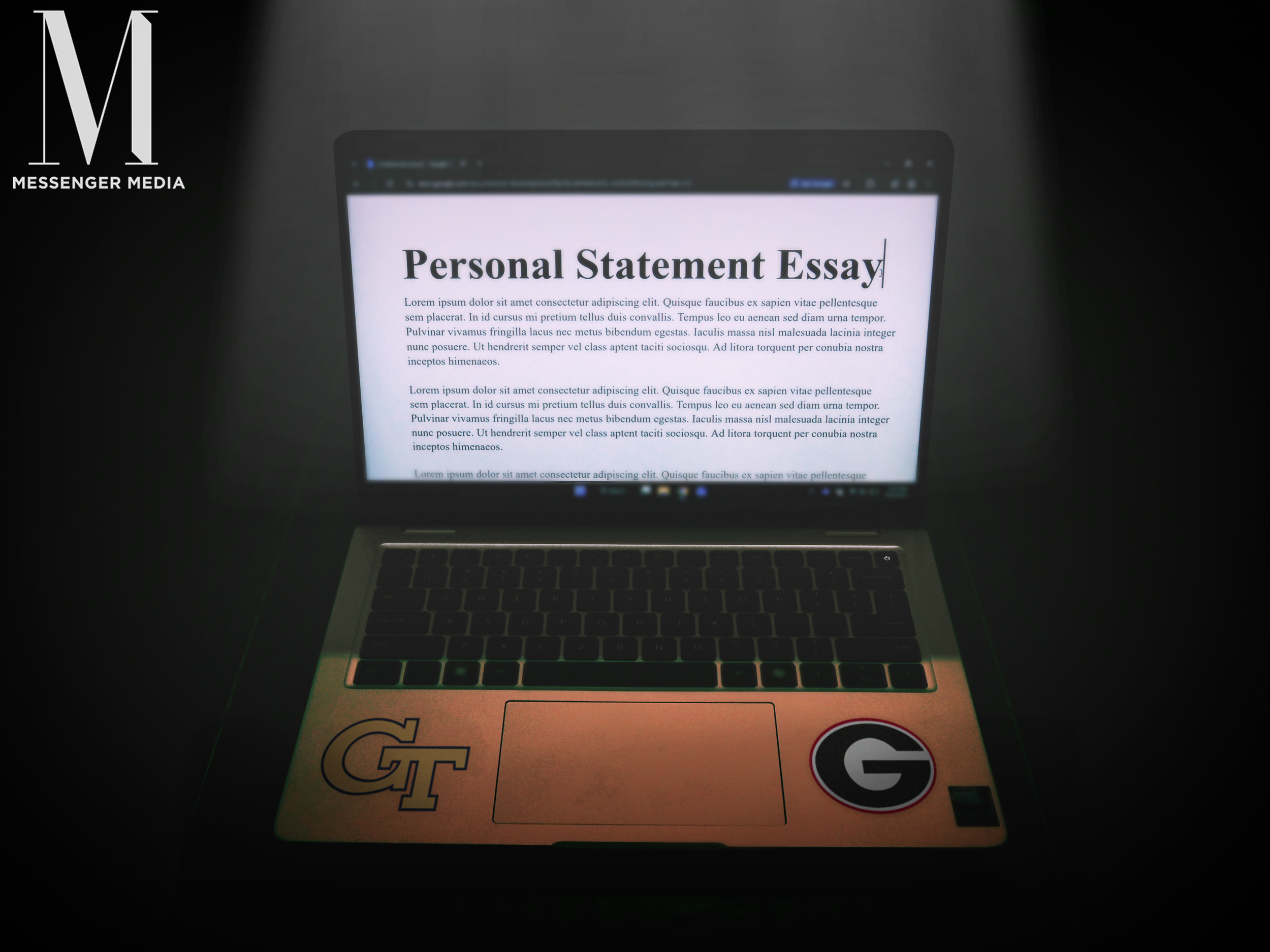
Photo by Chloe Choi and Milo Park
Chloe Choi, Staff Writer & Milo Park, Staff Writer
For several years, applying to the Georgia Institute of Technology and the University of Georgia meant writing more than just the standard Common Application personal essay. Students would add a short response—ranging from 150 to 600 words or more—to an already long application process. This year, these universities announced that they would remove the extra supplemental essays many seniors expected for the 2027 application cycle.
UGA was the first to announce the change in late May, and Georgia Tech followed in July, with both schools framing the decision as an effort to simplify the application process. The result is that the Common Application's single personal essay now carries more weight than before, as it will be the only piece of writing that many Northview seniors will submit to either school. In fact, some other colleges nationwide have been slowly implementing this change, with a number of universities dropping their supplemental essays over the past two admissions cycles, citing similar reasons as UGA and Georgia Tech.
Cara Dunn, head of the counseling department at Northview, shared that the counseling office learned the details of UGA's plans over the summer during a virtual information session with the admissions staff. They are now actively conveying this information to prospective students and explaining what it means as Early Action deadlines approach.
"The why behind it is that they were finding the supplemental essay didn't really add anything new to their decisions," Dunn said. "If a student presented themselves well within the context of everything, that one essay didn't really make or break the decision."
Both UGA and Georgia Tech are also well known for releasing early decisions by the Friday before Thanksgiving, and fewer essays to read makes the process more streamlined for both admissions officers and student applicants. As for how students should respond, amid potential panic, Dunn's advice is simply to view it from a neutral angle and avoid drastically overhauling applications.
"You still have the main essay, and that's going to showcase your writing skills," Dunn said. "Continue to do what students here have always done... put a lot of thought and detail into it, but not in a way that's stressful. This should be your own writing, a true representation of yourself."
She was also careful to note what hasn't changed in the admissions process. Extracurricular involvement, she said, will still carry the same weight it always has, since both schools maintain a thorough holistic review process.
"I don't feel like it takes anything truly away," Dunn said. "You're still getting a chance to show what you've always been able to show."
However, not everyone on the student side of this recent change sees the issue similarly. Northview seniors applying to UGA and Georgia Tech this fall described a range of reactions: some relieved by the lighter workload, while others are uneasy about what potential opportunities to shine in the application may disappear. For Derek Yuen, who plans to apply in-state to UGA and Emory amongst other universities on a pre-med track, the news came as an initial relief, but with a clear possible caveat.
"There are less essays for me to write," Yuen said. "[But] at colleges that are so competitive, having the supplemental essay to set you apart is kind of helpful. It gives them another thing to look at and makes your application more holistically approachable."
Since this opportunity to differentiate himself from other students is no longer available, Yuen is pushing to focus more on the personal essay and his activities. He now plans to use those remaining parts of his application to provide admissions officers with a clearer sense of who he is beyond his transcript.
"I think I'll try to be more personable and express more of what actually makes me unique, as well as my extracurriculars," Yuen said.
Senior Bryson Comar, who is planning on applying in-state to Georgia Tech, UGA, and Emory for a biology major, framed the change in terms of how it may affect competitiveness and how it may change the applicant pool for this application cycle.
"I think it makes it so that more people can apply, and then it's going to be more competitive because more people are going to be applying," Comar said.
With fewer essays standing between students and a complete submission to these prestigious schools, Comar expects admissions decisions to weigh more heavily on test scores and grades, as well as extracurriculars. Senior Aliyah Noorani, who is applying to Georgia Tech, UGA, and Georgia State University among others for a management information systems major, was slightly more critical of the change.
"I think it removes the ability for a student to express why they want to go to this college and show how interested they are in it," Noorani said.
Now that she believes there is less extra space to share who she is, Noorani is planning to shape her personal essays around themes like leadership that align with what each target school values. Even so, she feels that something is lost in the process.
"Now all the students have is their personal essay. It's harder to express all sides of who you are," Noorani said.
Senior Trinity Jung, who is applying in-state to Georgia Tech, UGA, and Emory on a pre-med track, said the announcement initially caught her off guard. However, because she is applying to multiple institutions with varying application requirements, Jung believes the change will not significantly impact her application strategy.
"I know Georgia Tech and UGA got rid of [supplementals], and that was really shocking to me," said Jung. "My initial reaction was that I was surprised. But I didn't see it as too much of a big obstacle because it's just a few schools out of my options."
Still, like Noorani, Jung sees the change as a sizeable loss of something personal that she could have included in her applications.
"Grades play a big role in the application process, and there could be some factors that affect someone's grades or their academic life," Jung said. "Essays are a great opportunity to really tell what a person is like, so it eliminates that."
In the midst of potential uncertainty at an academically focused school such as Northview, both UGA and Georgia Tech have stated that the fundamentals of review won't change. Admissions officers will still weigh grades, course rigor, test scores, and extracurricular activities alongside the single Common Application essay. For Dunn, that continuity and assurance of maintained equity is the point she keeps coming back to when she talks with students. Ultimately, she hopes to shed some light during a stressful and confusing time for many students.
"You're still getting a chance to show what you've always been able to show," she said. "And [your application] still should be a good reflection of you as a person."